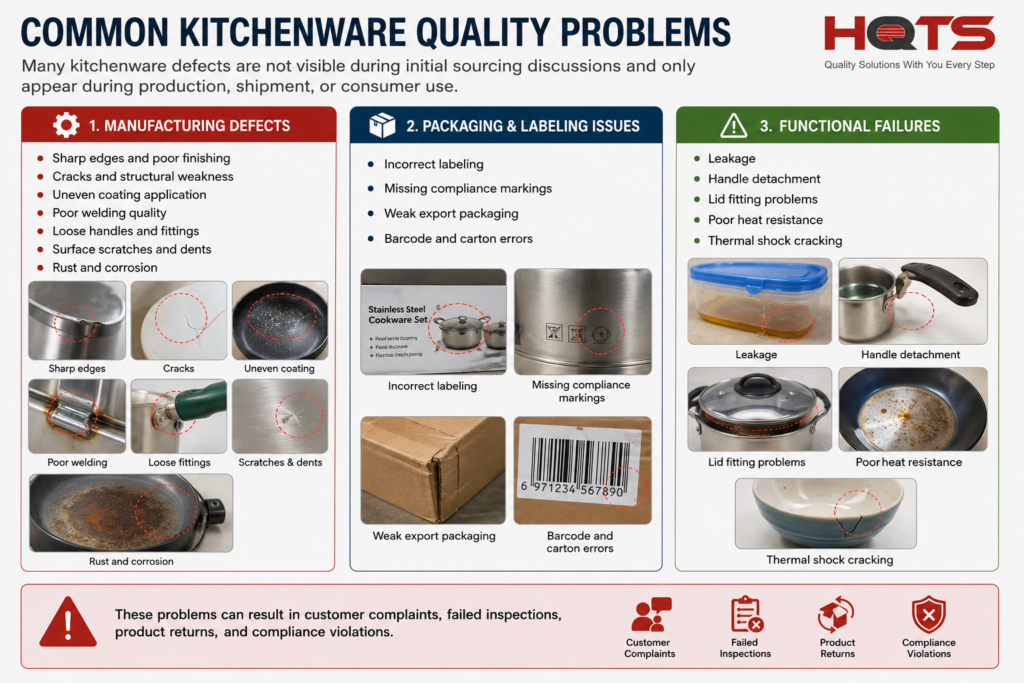
The global kitchenware industry continues to expand as demand rises for cookware, food storage products, utensils, and kitchen accessories. However, for importers, retailers, and sourcing companies, kitchenware products also carry significant quality and compliance risks.
A single defective shipment can lead to:
- Product recalls
- Customs rejection
- Marketplace bans
- Legal liabilities
- Brand reputation damage
Because kitchenware products come into direct contact with food and are exposed to heat, moisture, chemicals, and repeated daily use, strong quality control and compliance verification are essential before shipment.
Why Kitchenware Products Require Strict Quality Control
Kitchenware products must maintain both functional durability and food-contact safety throughout their lifecycle. Without proper inspection and testing, products may fail regulatory standards or create serious consumer safety concerns.
Common kitchenware categories include:
- Stainless steel cookware
- Non-stick frying pans
- Ceramic tableware
- Plastic food containers
- Silicone utensils
- Glass cookware
- Bamboo and wooden kitchen tools
Each product category requires different inspection and testing protocols depending on the material type, destination market, and intended usage.
Food-Contact Compliance Risks in Kitchenware
One of the biggest challenges in kitchenware sourcing is ensuring food-contact material safety. Many countries enforce strict regulations controlling chemical migration from products into food.
High-Risk Compliance Issues
Heavy Metals
Low-quality ceramics and coatings may contain harmful substances such as:
- Lead
- Cadmium
- Nickel
Chemical Migration
Plastic and silicone products may release unsafe chemicals when exposed to heat, oil, or acidic foods.
Non-Stick Coating Failures
Poor coating quality may cause:
- Flaking
- Peeling
- Unsafe chemical exposure
Material Misrepresentation
Suppliers may substitute lower-grade materials that do not match approved specifications or purchase agreements.
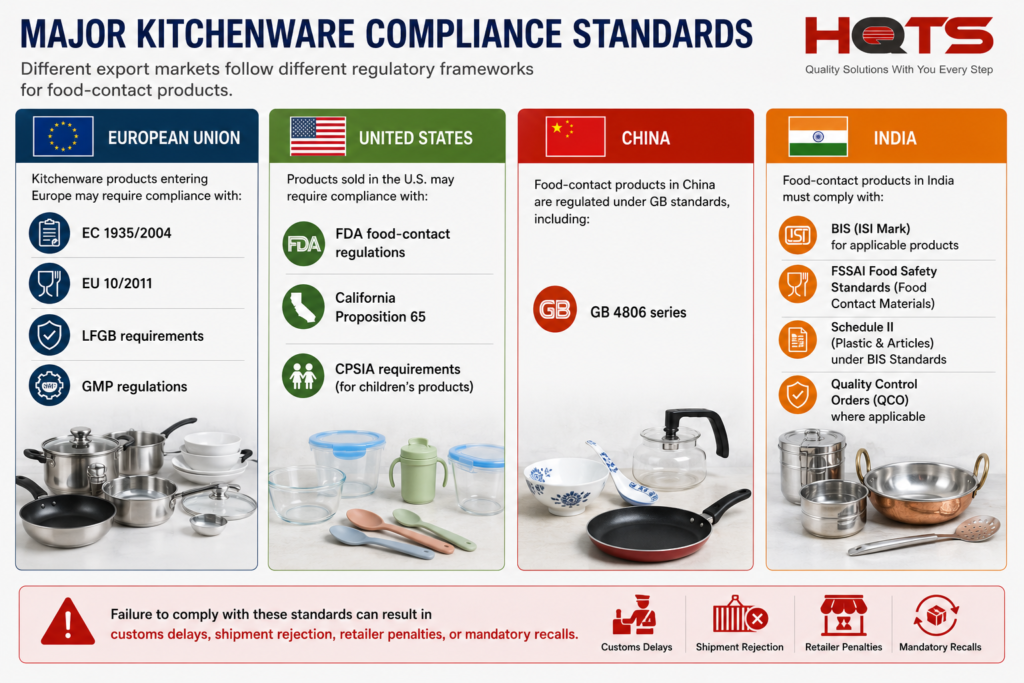
HQTS Kitchenware Inspection & Testing Support
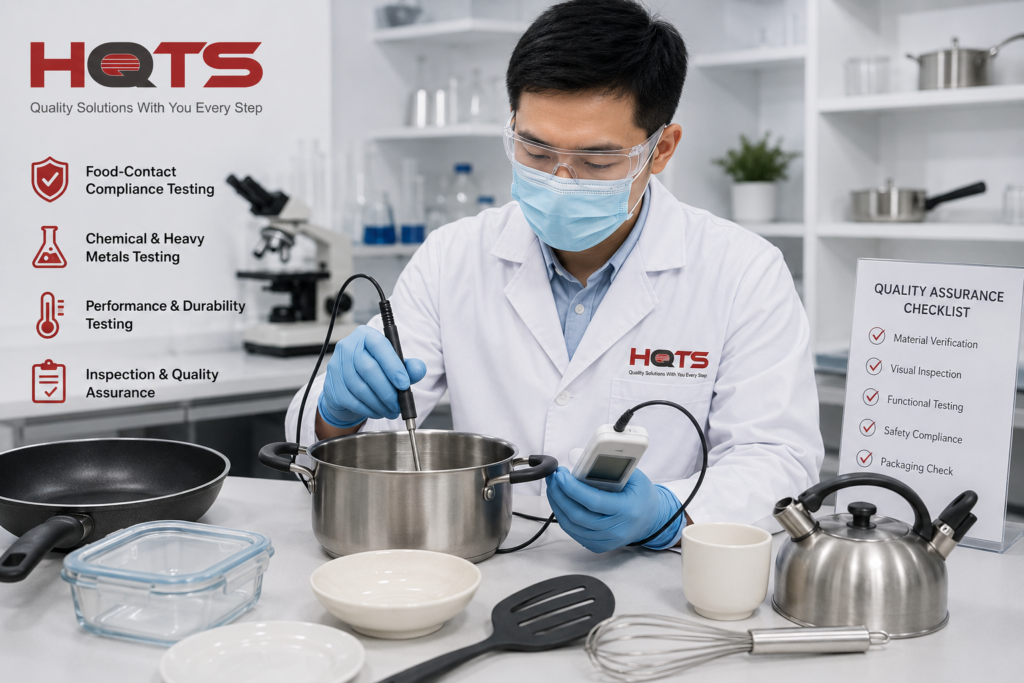
HQTS provides comprehensive quality assurance and compliance support for kitchenware manufacturers, importers, and retailers.
HQTS Testing Capabilities
Our laboratory testing support includes:
- Food-contact compliance testing
- Heavy metal testing
- BPA and PFAS testing
- Chemical migration analysis
- Thermal shock resistance testing
- Coating adhesion testing
- Mechanical durability testing
- Dishwasher safety evaluation
Our inspection and testing programs help clients meet retailer, marketplace, and international regulatory requirements.
Contact HQTS
If you are importing or manufacturing kitchenware products and require:
- Third-party inspections
- Supplier audits
- Food-contact compliance testing
- Factory evaluations
- Quality assurance support
HQTS can help you reduce sourcing risks, improve product quality, and strengthen compliance across your supply chain.