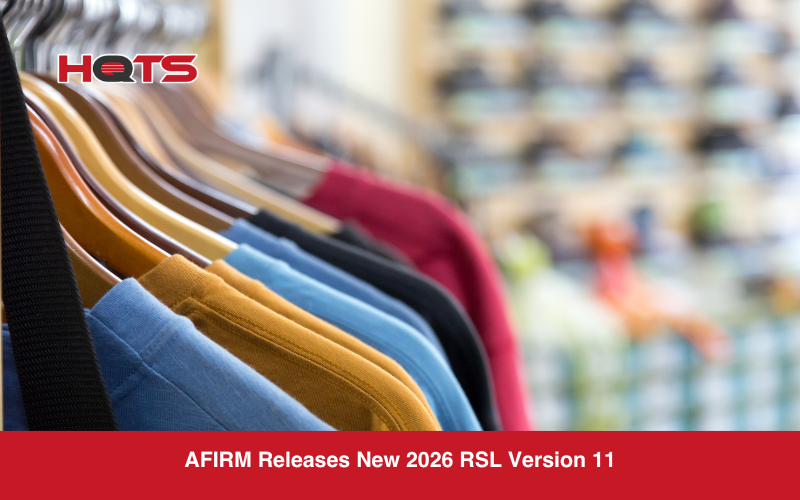
AFIRM has officially released the 2026 Restricted Substances List (RSL) Version 11, introducing a series of updates that reflect evolving global chemical regulations and growing regulatory attention on product safety, PFAS, and circular materials. The new version applies to apparel, footwear, accessories, and related consumer products, and is expected to be adopted by many international brands as part of their chemical management requirements.
Version 11 builds on the previous 10.1 release, with expanded substance coverage, tighter limits for several chemical groups, and revised test methods aimed at improving consistency across laboratories.
Conceptual and Definition Updates
Circular and Recycled Materials
One of the notable conceptual updates in this version is the addition of commentary on circular and recycled materials. AFIRM highlights the increasing tension between chemical restriction policies and circular economy goals, acknowledging that recycled content may introduce legacy chemicals that were permitted in the past but are restricted today. This clarification is particularly relevant for brands and suppliers working with recycled fibers, recovered plastics, and second-hand materials.
Sample and Composite Sample Definitions
AFIRM has also introduced clearer definitions for “Sample” and “Composite Sample” to reduce ambiguity when preparing materials for laboratory testing. This update is intended to improve consistency in test planning and reporting across supply chains.
Newly Restricted Substances and Tighter Limits
Several newly restricted substances and tightened limits have been introduced in Version 11.
Acetophenone Azine
Acetophenone Azine (CAS 729-43-1) has been added with a limit of 50 ppm due to its skin sensitization risk, along with a dedicated test method.
Bisphenols
Bisphenols are subject to significantly stricter controls. Limits for BPS, BPB, and BPF in leather have been reduced, BPA in polycarbonate materials is now limited to 100 ppm, and a unified limit of 200 ppm has been established for all bisphenols in other material categories.
Formamide in Mats
Formamide (CAS 75-12-7) is now limited to 200 ppm in play mats, baby mats, and yoga mats, reflecting heightened regulatory focus on products with prolonged skin contact.
UV Absorbers and Stabilizers
The reporting limit for the entire category of UV absorbers and stabilizers has been lowered to 50 ppm. AFIRM has also added clarification regarding the use of stabilized tetrahydrofuran (THF) during extraction for UV 328 analysis, which may affect testing protocols and historical data comparisons.
Updates to Test Methods and Standards
Version 11 includes multiple test method updates aligned with the latest international standards.
Cyclosiloxanes
The extraction method for cyclosiloxanes has been revised to ultrasonic extraction using TBME or acetone at 40°C for 30 minutes, followed by GC/MS detection.
Heavy Metals
Heavy metal testing has been updated for consistency, including the adoption of EN ISO 17072-2:2022 for leather total content testing and the upgrade of the nickel release method for eyewear frames to EN 16128:2025.
Organotins and Textile Solvents
Test methods for organotin compounds have been updated to ISO 16179:2025, while textile solvent testing has been revised to EN 17131-1:2025.
PFAS-Related Regulatory Developments
PFAS continues to be a major regulatory focus in AFIRM RSL Version 11. The update adds references to the latest French PFAS restriction decree, including notes on exemptions for second-hand goods, recycled products, and certain specialized applications.
Several PFAS substances that were removed during the 2025 mid-year update have been re-added to Appendix B, together with supplementary testing information, even where direct detection using EN 17681-1:2025 remains technically challenging.
Implications for Brands and Suppliers
Collectively, these updates reflect AFIRM’s ongoing effort to keep the RSL aligned with current legislation while providing practical guidance to brands and suppliers managing increasingly complex chemical compliance requirements. Companies are encouraged to review product materials, reassess testing scopes, and pay particular attention to newly added substances, tightened limits, and revised test methods.
HQTS Testing services for AFIRM RSL Version 11
At the operational level, HQTS laboratories are technically equipped to conduct key chemical tests aligned with AFIRM RSL Version 11, based on brand requirements, regulatory obligations, and risk-based testing strategies. While AFIRM does not approve or certify testing laboratories, HQTS operates as an independent third-party testing organization and supports apparel and textile clients with testing, regulatory interpretation, and compliance consulting related to AFIRM-aligned chemical management.
For companies navigating the transition to AFIRM RSL Version 11, understanding these regulatory updates is an essential first step toward maintaining market access and brand compliance in 2026 and beyond.
If you have any question related to AFIRM RSL Version 11, testing scope selection, or the applicability of specific test methods and limits to your products, HQTS technical teams are available to provide clarification and support.
HQTS works with apparel, footwear, and textile brands, manufacturers, and suppliers to address chemical compliance requirements through independent third-party testing, regulatory interpretation, and technical consultation.