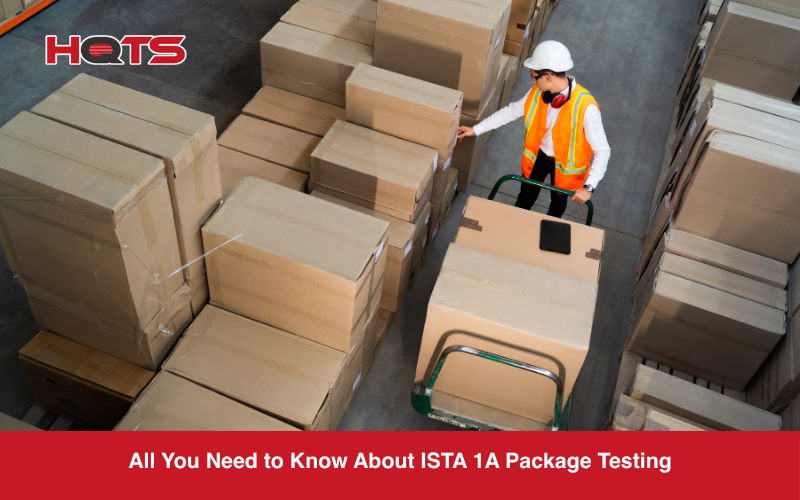
The International Safe Transit Association (ISTA) is an organization that has developed testing protocols and design standards for packages to ensure their contents arrive safely at their destination. One common ISTA procedure to evaluate the performance of a packaged product is the ISTA 1A test. In this guide, we’ll go through the key information, procedures, and requirements you need to know about ISTA 1A testing.
What is ISTA?
ISTA is a global organization that writes test procedures on how packages should perform to protect the content inside. By setting uniform guidelines, ISTA helps manufacturers minimize product damage, lower return rates, and optimize packaging material costs.
Packaging is the principal element for protecting products from damage during transportation. Packaging companies and manufacturers must be able to reassure their clients that their packaging solutions are safe, reliable, and compliant with global shipping standards.
The International Safe Transit Association (ISTA) designs laboratory tests that mimic the shocks, vibrations, and drops packages experience in the real world. These protocols are grouped into distinct series based on simulation complexity:
- ISTA 1 Series: Basic, non-simulation integrity tests designed to challenge the physical strength of the package.
- ISTA 2 Series: Partial simulation tests that combine basic elements of Series 1 with environmental testing (like temperature conditioning).
- ISTA 3 Series: General simulation tests that closely mimic real-world transport routes and logistics chains (such as FedEx or UPS parcel networks).
What is ISTA 1A?
ISTA 1A is a basic, non-simulation test procedure specifically designed for individually packaged products weighing 150 lbs (68 kg) or less. Its primary purpose is to test the fundamental strength and durability of a package using two mandatory testing stages: fixed displacement vibration and physical shock (drops). It does not simulate real-world logistics routes or test for environmental factors like moisture or temperature.
It is important to correct a common misconception: ISTA 1A does not test for environmental variables like moisture, humidity, or atmospheric pressure. If your product requires protection from humidity or compression forces, you will need to look at advanced protocols like ISTA 2A or ISTA 3A.
Before beginning an ISTA 1A test, the manufacturer must define several critical parameters to establish what constitutes a “pass” or “fail”:
- What constitutes a damaged product.
- What damage tolerance level is acceptable.
- The acceptable physical condition of the packaging at the end of the test.
What are the Types of ISTA 1 Procedures?
The ISTA 1 Series contains multiple test protocols grouped by package weight and testing mechanism. While ISTA 1A is the standard protocol for packages under 150 lbs utilizing fixed-displacement vibration, other protocols within the series accommodate heavier loads, unitized pallets, or random vibration profiles.
You can check here a full list of ISTA Procedures:
The table below breaks down the primary procedures within the ISTA 1 Series so you can easily identify which standard matches your specific packaging footprint:
| Procedure | Target Package Type & Weight | Core Testing Requirements |
| ISTA 1A | Individual packages $\le$ 150 lbs (68 kg) | Fixed displacement vibration, Shock (drop/impact) |
| ISTA 1B | Individual packages > 150 lbs (68 kg) | Fixed displacement vibration, Shock (drop/impact) |
| ISTA 1C | Individual packages $\le$ 150 lbs (68 kg) | Vibration (fixed or random), Shock, Compression |
| ISTA 1D | Individual packages > 150 lbs (68 kg) | Vibration (fixed or random), Shock, Compression |
| ISTA 1E | Unitized loads (Palletized products) | Vertical linear or random vibration, Shock |
| ISTA 1G | Individual packages $\le$ 150 lbs (68 kg) | Random vibration, Shock |
| ISTA 1H | Individual packages > 150 lbs (68 kg) | Random vibration, Shock |
What Are the ISTA 1A Test Sequences and Requirements?
To achieve ISTA 1A certification, a package must undergo three consecutive stages in a certified laboratory: ambient temperature/humidity preconditioning, a continuous fixed-displacement vibration test, and a multi-angle shock (drop) test sequence. These tests are conducted sequentially on the same sample to simulate the cumulative physical stress of transit.
The test sequence must be followed exactly as designed by the ISTA standard:
- Preconditioning
The package is kept at ambient room temperature and humidity level before testing begins to establish a consistent baseline.
- Vibration (Fixed Displacement)
The package is placed on a vibration table and subjected to a 1-inch (25mm) peak-to-peak movement. The vibration frequency is raised until the package momentarily leaves the surface of the metal plate, ensuring a rigorous, repetitive bouncing motion.
- Shock Testing (Free-Fall Drop Test)
The package is subjected to a series of 10 precise free-fall drops using a drop-test machine. The drop heights are determined by the overall weight of the package:
| Packaged Weight (lbs) | Packaged Weight (kg) | Drop Height (Inches) | Drop Height (mm) |
| 0 to 21 lbs | 0 to 10 kg | 30 in | 760 mm |
| 21 to 40 lbs | 10 to 19 kg | 24 in | 610 mm |
| 40 to 60 lbs | 19 to 28 kg | 18 in | 460 mm |
| 60 to 100 lbs | 28 to 45 kg | 12 in | 310 mm |
| 100 to 150 lbs | 45 to 68 kg | 8 in | 200 mm |
The ISTA 1A Drop Sequence Protocol
During the drop test, the package must be dropped on specific orientations in this strict order to ensure all weak points are evaluated:
- The most fragile corner (usually the manufacturer’s joint)
- The three shortest edges radiating from that corner
- The three medium edges radiating from that corner
- The three longest edges radiating from that corner
- Six flat face drops (top, bottom, and all four sides)
What Are the Benefits of ISTA 1A Certification?
ISTA 1A certification provides companies with verified proof that their packaging can withstand standard handling environments. It dramatically lowers costs associated with transit damage, reduces product return rates, protects brand equity, and prevents over-packaging—which reduces excess material costs and shipping weight.
Working with an accredited, third-party laboratory offers several strategic benefits for manufacturers:
- Fewer Returns & Refunds: Designing packaging to meet ISTA 1A standards significantly reduces the probability of products arriving at your customer’s doorstep in pieces.
- Optimized Material Costs: Testing reveals whether your packaging is over-engineered. You can swap heavy or expensive materials for lighter, cost-effective options without sacrificing transit safety.
- Carrier Claim Leverage: In the event of a dispute with major carriers (like FedEx or UPS), having an official ISTA certification proves that your package was robust enough for shipping, making cargo insurance claims easier to settle.
Partner with HQTS for Certified Packaging Testing
Don’t leave your product safety to chance. At HQTS, our state-of-the-art laboratory is fully accredited by leading domestic and international authorities, including the International Safe Transit Association (ISTA) and ASTM International.
We offer comprehensive transit testing solutions, including ISTA 1A, ASTM D4169, and more, to help you secure compliant, safe, and cost-effective packaging. Contact HQTS today to schedule your ISTA packaging test.