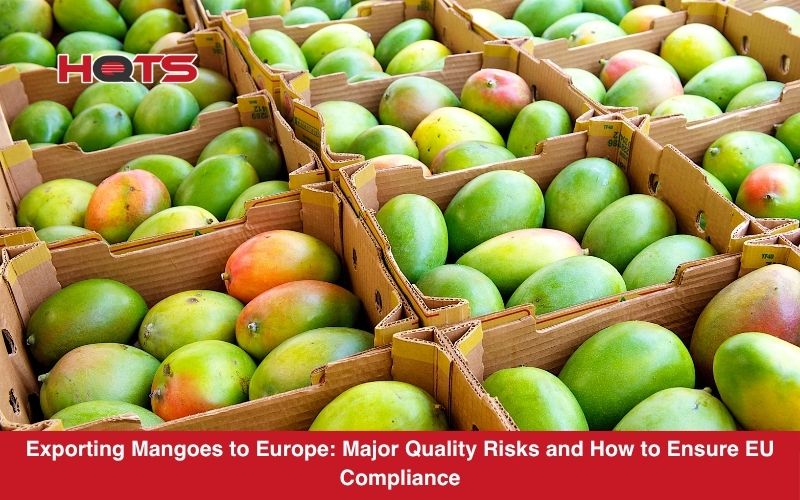
The global demand for premium, high-quality tropical fruits across Europe is rising rapidly, offering mango exporters a massive opportunity to scale their international business. From popular commercial varieties to niche, high-value selections, European retailers and consumers are consistently looking for reliable, year-round suppliers.
However, breaking into and maintaining a presence in the European market is highly challenging. The EU enforces some of the strictest food safety regulations, phytosanitary requirements, and retail quality standards in the world. Even minor cosmetic or chemical defects can result in immediate border rejections, devastating financial losses, customer cargo claims, and long-term damage to an exporter’s reputation.
For commercial exporters targeting European buyers, delivering consistent, retail-grade quality is no longer optional—it is a baseline requirement for market entry.
To help you navigate these high-stakes logistics, we have broken down the primary quality and compliance risks in the international mango supply chain, alongside strategies to protect your shipments.
Main Regions Supplying Mangoes to Europe
The European mango import market relies on a highly structured calendar of global suppliers, with the vast majority of import volumes concentrated across distinct continental regions. According to the latest data, Latin America stands as the dominant supplying region, commanding nearly two-thirds of the total market volume, led primarily by the year-round shipments of Brazil and the high-quality winter varieties from Peru.
Africa is the second-largest supplying continent, accounting for nearly one-fifth of Europe’s total mango imports, driven heavily by West African nations like Côte d’Ivoire, Senegal, Mali, and Burkina Faso, which fill the critical spring window.
The remaining international volumes are supplied by the Caribbean and Asia—with nations like India and Pakistan catering extensively to specific ethnic and niche markets—while domestic European production from Spain provides localized, premium volumes in the late summer and autumn months.
Key Quality and Compliance Risks in Mango Exports
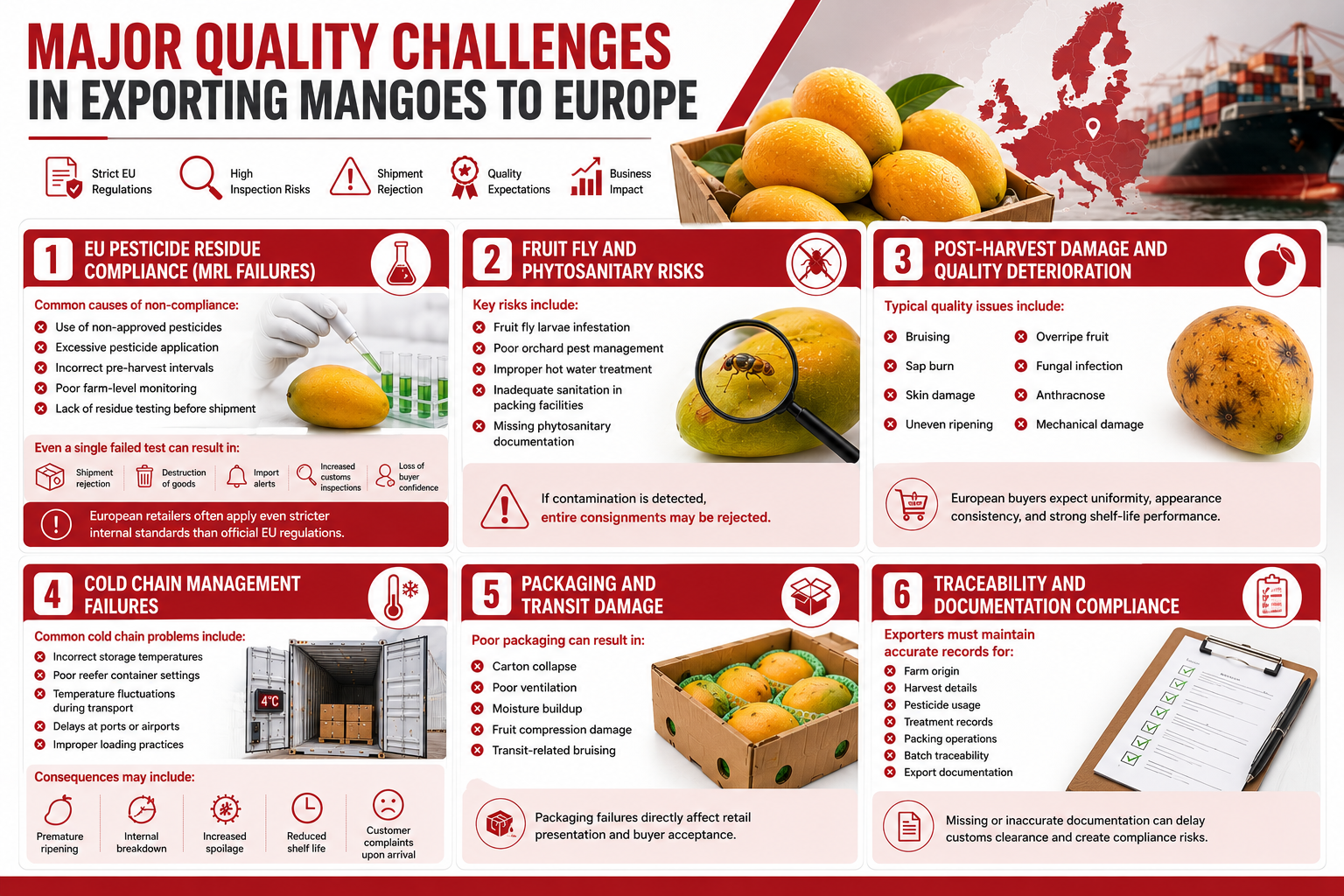
Successfully shipping fresh produce to Europe requires mitigating risks at every stage of the supply chain. Exporters must actively manage:
-
Strict EU Pesticide Regulations: The EU frequently updates its Maximum Residue Limits (MRLs). Exceeding these limits, even slightly, results in immediate import alerts and product destruction.
-
Phytosanitary Threats: European customs have a zero-tolerance policy for pests like the harmful fruit fly (Tephritidae) and stone weevil.
-
Cold Chain Breaches: Mangoes are highly temperature-sensitive. Poor temperature management during transit accelerates ripening, causes chilling injuries, or triggers fungal decay.
-
Substandard Packaging & Labeling: Incorrectly ventilated boxes, poor stacking, or non-compliant traceability labels can cause physical damage and customs delays.
How HQTS Helps Mango Exporters Mitigate Risks
As a globally recognized third-party quality control and inspection company, HQTS provides end-to-end quality assurance solutions specifically tailored for fresh produce exporters. We help you eliminate guesswork, protect your bottom line, and secure seamless entry into European ports.
1. Supplier and Farm Audits
Quality begins in the orchard. HQTS conducts professional, on-site supplier assessments and farm audits to ensure your growers meet strict international benchmarks before harvest ever begins.
-
Good Agricultural Practices (GAP) compliance checks
-
Farm hygiene and packing facility evaluations
-
On-site pesticide management and spray record reviews
-
Robust traceability verification from farm to gate
2. Pre-Shipment Inspection (PSI)
Don’t let surprises catch you at the destination port. Our inspectors conduct thorough pre-shipment inspections to verify that your mangoes meet both buyer specifications and official EU entry standards.
-
Visual Quality Assessments: Checking for defects, skin blemishes, and uniform color.
-
Physical Metrics: Verifying precise sizing, weight distribution, and firmness/ripeness stages.
-
Packaging & Labeling: Confirming box integrity, ventilation, barcodes, and traceability details.
3. Pesticide Residue Testing Support
Navigating EU MRL compliance requires precision. HQTS streamlines the chemical testing process by coordinating with accredited laboratories to ensure your fruit is safe for European shelves.
-
Supervised, unbiased sample collection from batches
-
Coordination with certified labs for comprehensive MRL and heavy metal testing
-
Fast documentation review to prevent border rejections
4. Packhouse and Cold Chain Verification
Even the best fruit will spoil if handling procedures fail. We inspect packing house operations and cold storage environments to guarantee that the cold chain remains unbroken.
-
Hygiene and sanitation audits of processing areas
-
Real-time temperature and humidity monitoring in cold storage
-
Reefer container pre-cooling and structural integrity checks
5. Container Loading Supervision (CLS)
The final step at origin is often where physical damage occurs. HQTS inspectors stand on-site during loading to supervise the handling of your cargo.
-
Verifying container cleanliness and odor-free conditions
-
Ensuring proper stacking methods to optimize airflow and ventilation
-
Cross-checking final quantities and securing official seal applications to prevent tampering
6. Documentation and Compliance Reviews
Missing or inaccurate paperwork is one of the leading causes of customs delays. We help strengthen your export readiness by cross-referencing your vital logistics documents.
-
Review of phytosanitary certificates, packing lists, and commercial invoices
-
Verification of product labeling compliance with EU food law
-
Assistance with quality reports to bolster buyer confidence
Why Choose HQTS for Fresh Produce Quality Control?
Leading agricultural exporters rely on HQTS to safeguard their supply chains because we offer:
-
Unbiased Third-Party Perspective: Objective data and transparent reporting you can trust.
-
Fresh Produce Expertise: Highly trained inspectors who understand the biological nuances of mango ripening and decay.
-
Rapid Turnaround Times: Fast, actionable inspection reports delivered right when you need to make critical shipping decisions.
-
Global Compliance Knowledge: Up-to-the-minute understanding of changing EU import regulations and retailer standards.
Ready to Secure Your Mango Supply Chain?
Don’t let compliance risks compromise your international growth. Contact HQTS today to discover how our tailored fresh fruit inspection and quality assurance services can help your business reduce risks, master EU compliance, and build lasting trust with European buyers.